PFAS and PPWR: What Food Packaging Manufacturers Need to Know

As the Packaging and Packaging Waste Regulation (PPWR) begins to apply across the European Union, many food producers are asking the same question: what do the new PFAS requirements mean for packaging, and what actions are needed to remain compliant?
At Wipak, we believe regulatory changes should not create confusion. They should create opportunities to improve transparency, strengthen supply chains, and build confidence in food packaging. That is why we have been actively preparing for the PPWR PFAS requirements for several years and supporting our customers through the transition.
In this article, we explain what the new requirements are, why PFAS has become a focus area, and how we have approached compliance across our food packaging portfolio.
What are PFAS?
PFAS stands for per- and polyfluoroalkyl substances, a large group of fluorinated chemicals that have been used in various industrial applications due to their performance characteristics, including resistance to heat, grease, and moisture. Some PFAS have historically been used in food packaging applications as well as in many other industries.
In recent years, regulators worldwide have increased their focus on PFAS because certain substances in this group can persist in the environment for long periods. As a result, lawmakers have begun introducing stricter requirements regarding their use and presence in products.
Within the EU, PPWR is one of the first major packaging regulations to establish specific PFAS limits for food-contact packaging.
What does PPWR say about PFAS?
Article 5(5) of the PPWR introduces new PFAS concentration limits for food-contact packaging that apply from 12 August 2026. Packaging that exceeds these limits cannot be placed on the market after that date.
The regulation establishes three thresholds:
- 25 ppb for any individual PFAS measured through targeted PFAS analysis
- 250 ppb for the sum of PFAS measured through targeted PFAS analysis
- 50 ppm for PFAS, including polymeric PFAS, determined through total fluorine (TF) analysis
To support implementation, the European Commission published guidance clarifying how compliance may be assessed. The guidance recommends a stepwise approach that begins with total fluorine testing. According to the Commission, materials with total fluorine values below 50 mg/kg can be considered compliant with the PFAS requirements.
This clarification has been important for the packaging industry because it provides a practical route for demonstrating compliance while harmonised testing methodologies continue to evolve.
Why has PFAS become such an important topic in packaging?
One reason is that PFAS is not a single substance. It is a broad group of chemicals that can be introduced into packaging materials in different ways.
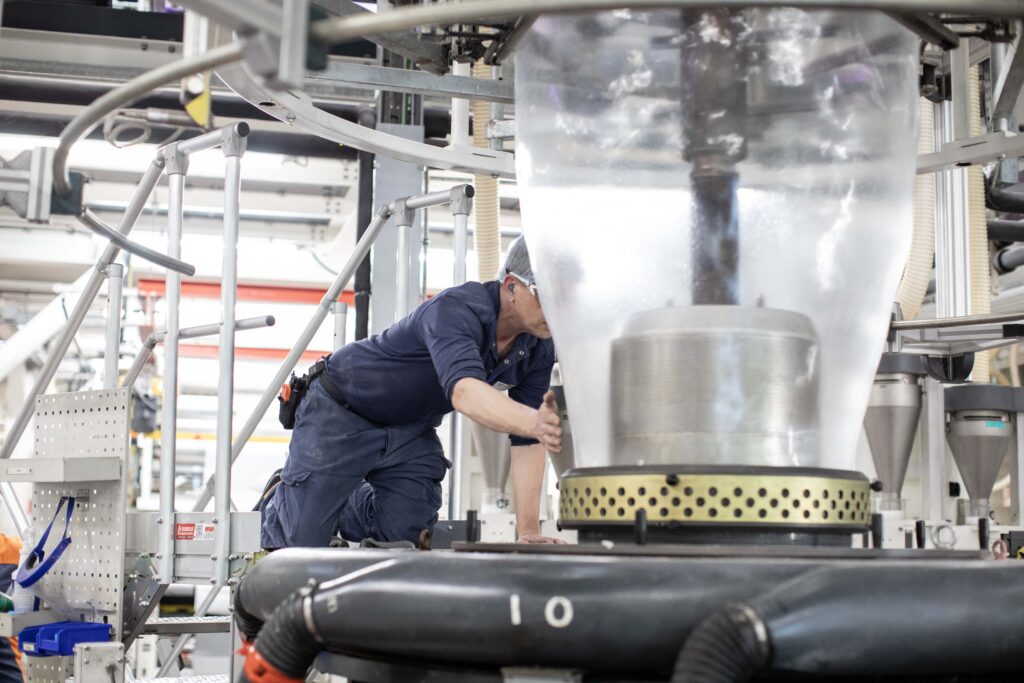
Historically, certain fluoropolymer-based processing aids have been used in the production of plastic films. These materials supported manufacturing efficiency and film quality but can contribute to total fluorine measurements. Although such materials have been permitted under existing food-contact regulations, the introduction of the PPWR limits has driven a major transition across the packaging value chain.
At the same time, regulators acknowledge that testing and interpretation continue to develop. The European Commission has noted that there is currently no harmonised EU methodology for PFAS testing in food-contact packaging and that technical guidance may continue to evolve as implementation progresses.
For food manufacturers, this makes supplier transparency and regulatory expertise more important than ever.
How we prepared for the PPWR PFAS requirements
At Wipak, we began addressing this topic well before the legal deadline.
Since 2023, we have worked closely with raw material suppliers to phase out materials containing PFAS in our film recipes.
This process included:
- Reviewing raw material formulations
- Working with suppliers on substitution programmes
- Evaluating recipes and production processes
- Assessing potential sources of unintended PFAS presence
- Conducting risk-based verification and analytical testing
According to our internal phase-out programme, deliveries of food packaging films do not exceed PFAS limits since March 2026, meaning PFAS-containing raw materials are no longer intentionally used in our production processes.
What Does “PFAS-Free” Mean?
This is an area where clear communication matters.
The term PFAS-free is widely used in media coverage, industry discussions and online searches. However, there is currently no universally agreed regulatory definition of what constitutes ‘PFAS-free’ packaging . PFAS-free cannot be guaranteed while the phrase ‘PFAS are non-intentionally added’ actually refers to the fact that all possible actions are taken to avoid PFAS and that they are not part of the film recipe.
For that reason, we generally avoid using the term as a standalone claim. Instead, we believe it is more meaningful to discuss the specific actions taken to achieve compliance and the evidence used to support it.
At Wipak, our focus is on ensuring that we do not intentionally use PFAS-containing raw materials in the production of our food packaging films and on meeting the requirements established under PPWR. We support this approach through supplier engagement, material substitution programmes and compliance verification procedures.
At the same time, modern manufacturing and supply chains are complex therefore it is not always possible to completely exclude the theoretical presence of trace amounts resulting from factors outside a manufacturer’s direct control.
Rather than relying on broad terminology, we believe transparency about materials, processes and regulatory compliance provides customers with a more accurate understanding of packaging performance and compliance status.
Supporting our customers with compliance documentation
A common misconception is that packaging suppliers are solely responsible for proving PPWR compliance.
The PPWR places the legal responsibility for conformity assessment and the declaration of conformity on the manufacturer of the final packaging placed on the market. Suppliers play a supporting role by providing the information and documentation needed for those assessments.
Our role is therefore to provide customers with the information necessary to support their technical documentation and compliance activities.
To assist our customers, we provide PFAS-related information in our role as supplier based on:
- Product formulations
- Supplier documentation
- Verification procedures
- Risk based analytical TF tests
Our objective is not simply to deliver packaging materials but to help customers navigate increasingly complex regulatory requirements with confidence.
Looking ahead
PPWR marks a significant step forward in the regulation of packaging materials within Europe. The new PFAS requirements are among the first provisions of the regulation to become applicable and are likely to influence future discussions around packaging composition, substances of concern, and supply chain transparency.
For food manufacturers, the best approach is to engage early with packaging suppliers, review compliance documentation, and ensure that regulatory requirements are understood well before products reach the market.
At Wipak, we see compliance as more than a regulatory obligation. It is part of our commitment to responsible packaging development, transparency, and long-term customer partnerships.
As requirements continue to evolve, we will continue monitoring regulatory developments, supporting our customers with up-to-date information, and working across our supply chain to ensure our solutions are ready for the future.
Sources
- European Commission, Guidance document for Regulation (EU) 2025/40 on packaging and packaging waste, June 2026.
- European Commission, Packaging and Packaging Waste Regulation (PPWR) Frequently Asked Questions, August 2026.